1. Poultry Waterline Sanitation
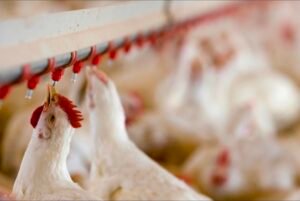
Instant HOCl can be continuously metered into the drinker-waterline system to help maintain water quality and control microbial growth within the lines and chickens. When using a 1:128 medicator, prepare the stock solution according to the Instant HOCl directions and monitor the finished water at the drinker line. A practical target is approximately 2-5 ppm free available chlorine, with testing at the end of the line used to confirm that an effective residual is reaching the birds. Poultry guidance from the University of Georgia recommends approximately 2-3 ppm chlorine at the drinker farthest from the medicator, while EPA-registered poultry drinking water products include directions in the 1-5 ppm available-chlorine range.
Research Supporting Continuous Low-Level HOCl
The 2025 broiler study used approximately 1 ppm free available chlorine (FAC) at about pH 6.0 continuously during an approximately 42-day grow-out. The researchers reported significantly lower microbial loads in fresh manure and cecal contents in the HOCl group, while overall growth performance across the production cycle was not significantly affected.
Source: 2025 peer-reviewed broiler study, published in Poultry Science
2. Between-Flock Waterline Cleaning
Between flocks, when birds are not present, a stronger HOCl solution can be used for more intensive waterline sanitation. Fill the waterlines with the desired sanitation concentration and allow 30 minutes contact time throughout the system. After treatment, drain the lines and thoroughly flush with fresh water before the next flock. Always verify concentration with appropriate test equipment and follow product and equipment recommendations.
3. Using ORP to Monitor Water Sanitation
ORP (Oxidation-Reduction Potential) is a useful tool for monitoring the sanitizing condition of poultry drinking water. It is measured in millivolts (mV). In general, a higher positive ORP indicates greater oxidation potential, but ORP should be used along with free-chlorine testing and pH- not as a direct measurement of HOCl concentration.
How to check ORP
- Collect a fresh water sample, preferably from the end of the drinker line.
- Place the clean ORP probe into the sample.
- Gently stir and allow the reading to stabilize, typically for 30 to 60 sec.
- Record the ORP along with pH and free available chlorine.
- Compare readings over time. A significant drop can help identify changes in sanitizer residual, organic demand (load), pH, or water conditions.
ORP Verification- Check Your Water at 3 Points
Source Water
Before Injection
Record untreated ORP as your baseline
Shows where your water starts before sanitizer is injected
Post-Medicator
After Injection
650-800 mV
Helps confirm active sanitizer after injection.
Far-End Nipple
End of Longest Line
≥650 mV
Helps verify sanitizing activity remains where the birds drink
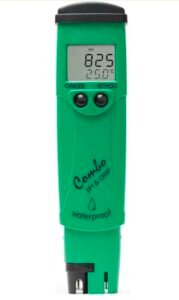
Recommended ORP/pH Meter
Disclosure: As an Amazon Associate, AgriSan LLC earns from qualifying purchases.
4. Fogging & Spraying
Fogging and Spraying With Birds Present
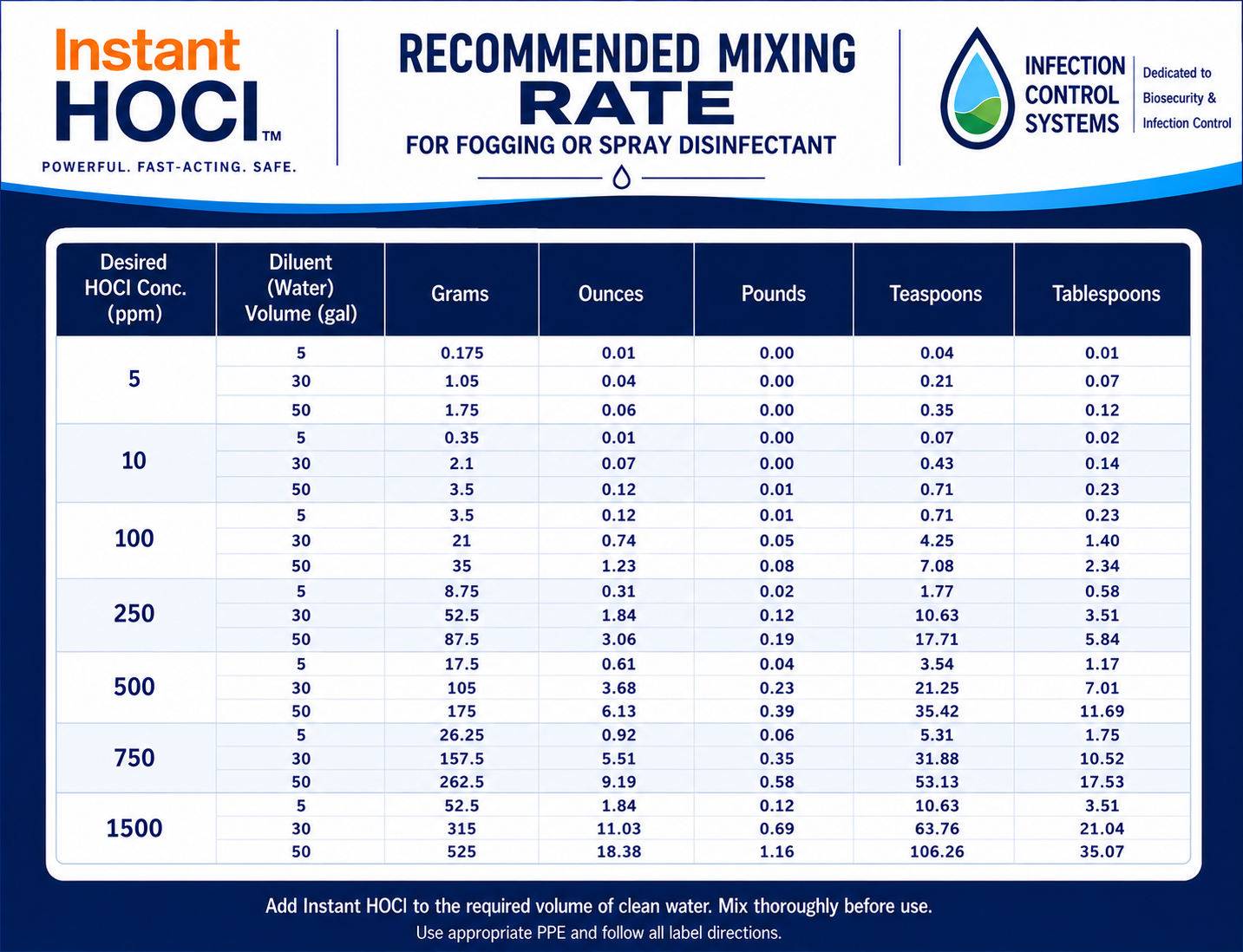
Instant HOCl provides poultry growers with another practical sanitation tool that can be applied by misting, fogging, or spraying. When used according to product directions, HOCl can be incorporated into an ongoing sanitation program while the birds are present, allowing growers to treat the poultry-house environment without waiting until cleanout.
In poultry-house environments, organic matter can create significant sanitizer demand and reduce the amount of active free chlorine (FAC). In our own poultry-house applications, AgriSan uses Instant HOCl at approximately 1,500 ppm for spraying. Application rates should be selected for the intended use and applied according to product directions.
Equipment & Surface Sanitation
Instant HOCl can be used to sanitize poultry equipment and other appropriate surfaces. Remove manure, litter, dust and other heavy organic material before application. For cleaned equipment and surfaces, HOCl concentrations up to 200 ppm provide a practical sanitation range. Research has demonstrated antimicrobial activities of sprayed HOCl at concentrations from 50-200 ppm, although effectiveness depends on surface conditions, organic load and contact time.
HOCl Availability by pH
Move the slider to estimate the percentage of free chlorine present as hypochlorous acid (HOCl) and hypochlorite ion (OCl⁻).
Educational estimate based on the acid-dissociation relationship of HOCl at approximately room temperature. This chart shows estimated chemical distribution—not guaranteed microbial kill or treatment performance. Actual results can be affected by temperature, chlorine concentration, organic load, contact time, water chemistry and product formulation. Follow the product label and verify conditions through onsite testing.
How to Use These Tools
Start with your water pH. The pH tool estimates how your Free Avalible Chlorine is distributted between hypochlorous acid (HOCl) and hypochlorite ion (OCl-). Then use the Water Treatment Calculator to enter your desired drinker-line ppm, injector ratio, and stock-tank size to estimate the amount of Instant HOCl needed.
Always verify the final concentration at the drinker line with appropriate testing equipment.
HOCl Water-Treatment Calculator
Estimate HOCl availability, required stock-solution strength and the amount of Instant HOCl needed for your stock tank.
Estimated chlorine distribution at this pH
A 640 ppm stock solution injected at 1:128 provides an estimated 5 ppm total free chlorine at the drinker line.
Approximate product required
to 30 gallons of clean water.
Line calculation: 5 ppm × 128 = 640 ppm stock solution
Product calculation: 640 ppm × 30 gallons × 0.007 = 134.4 grams
Educational planning estimate only. HOCl/OCl⁻ distribution is calculated using an assumed HOCl pKa of 7.5 at approximately room temperature. Actual distribution and delivered concentration may vary with temperature, water chemistry, chlorine demand, organic load, injector calibration, water pressure, flow rate, mixing and sampling location. Do not compensate for unsuitable pH simply by increasing sanitizer concentration. Follow the current product label and verify delivered concentrations through onsite testing. Weighing the granular product in grams provides the most accurate measurement.